About Langleys
A Love of Ragdolls
Our love of breeding began long before Langleys Ragdolls. With over 16 years of breeding experience and the last three years dedicated to Ragdolls, we have developed a real appreciation for just how special this breed is. Today, our breeding programme is dedicated exclusively to blue and lilac Ragdolls.
Ragdolls are undeniably beautiful, but it is their temperament that truly sets them apart. Their gentle, affectionate and people-orientated nature is what made us fall in love with the breed, and preserving those wonderful characteristics is at the heart of what we do at Langleys.
Our cats are first and foremost part of our family. They live alongside us in our home, receive plenty of affection and have an environment designed around their happiness, health and natural behaviours.
At Langleys Ragdolls, we raise well-socialised kittens with thoughtful care, careful health planning and a lifelong commitment to every home they join.
A glimpse into the history of Ragdolls
Story of the Ragdoll
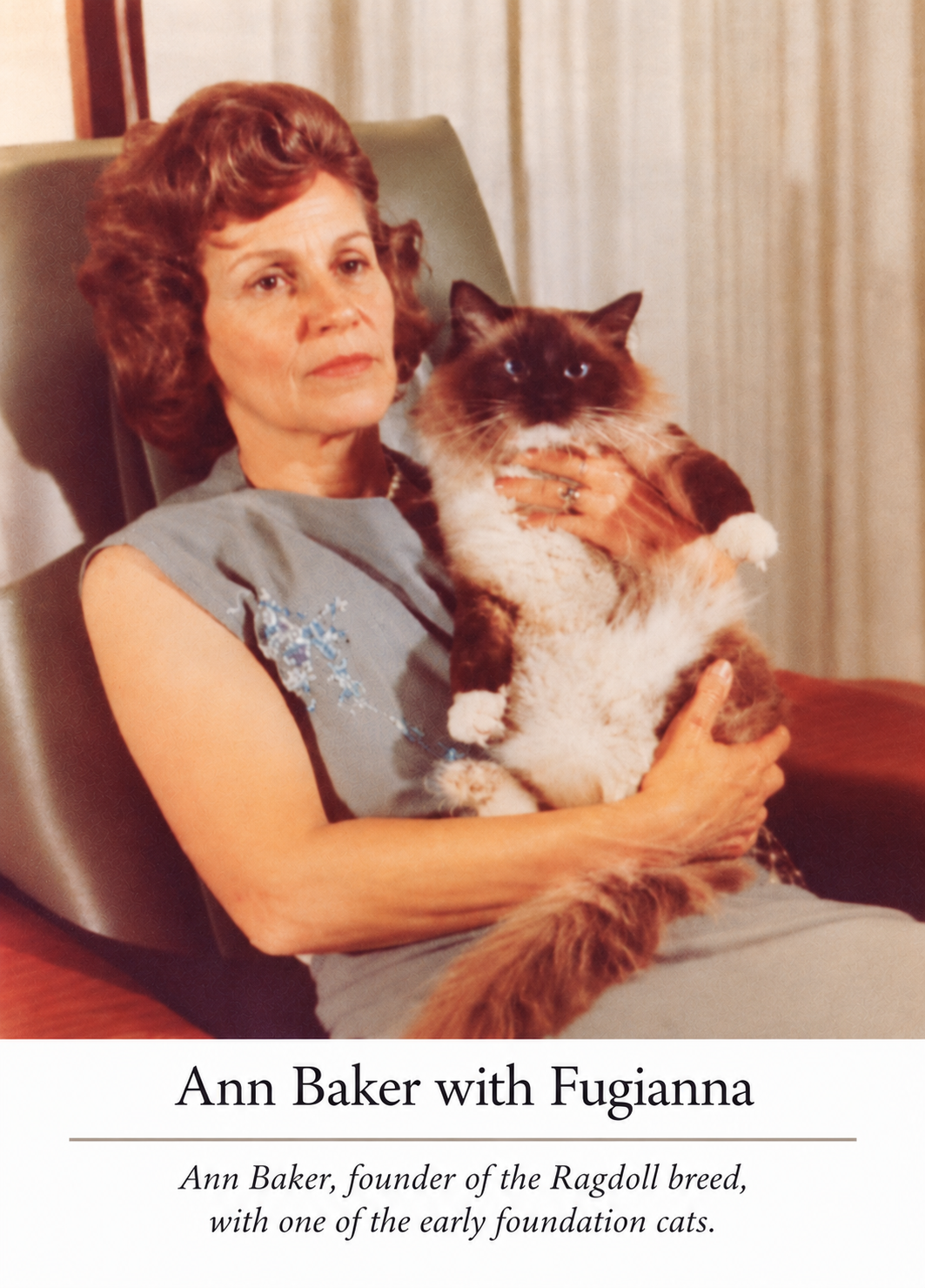
The Ragdoll is a relatively young breed whose story began in California during the 1960s with breeder Ann Baker and a white, semi-longhaired cat named Josephine.
Josephine and her descendants produced kittens that attracted attention not only for their appearance, but also for their unusually relaxed, gentle and affectionate personalities. Baker began selectively breeding from these cats, laying the foundations for the breed that would eventually become known around the world as the Ragdoll.
Among the cats that shaped the breed’s earliest generations were Daddy Warbucks, Fugianna and Buckwheat, all descendants of Josephine. Daddy Warbucks and Buckwheat later produced Tiki and Kyoto. On 30 December 1966, Daddy Warbucks, Tiki, Kyoto and Fugianna became the first four cats to be officially registered as Ragdolls, with Daddy Warbucks receiving the breed’s first registration number.
From those early beginnings came the characteristics for which Ragdolls are still loved today: striking blue eyes, beautiful semi-long coats and, most importantly to us, their wonderfully gentle and companionable nature.
It is that temperament, as much as their beauty, that we hope to preserve for future generations of Ragdolls.
Ragdolls arrive in Britain
The Ragdoll’s journey to Britain began in 1981, when British breeders Lulu Rowley of Petil-Lu Ragdolls and Pat Brownsell of Patriarca Ragdolls imported cats from the Blossom-Time cattery of Denny and Laura Dayton in California.
Among these early imports were Blossom-Time Lad, Lass, Prim and Proper, cats that would play an important part in establishing the breed in Britain.
Importing cats was rather different in those days. Britain’s quarantine regulations meant the new arrivals were required to spend six months in quarantine. During this period, Lass gave birth to three kittens, creating the first family of Ragdolls born from the newly imported British breeding programme.
From these small beginnings, interest in the Ragdoll grew throughout the UK. The breed went on to receive recognition from the Governing Council of the Cat Fancy (GCCF) in 1990, firmly establishing the Ragdoll within the British pedigree cat world.
More than four decades after those first cats arrived on British soil, the Ragdoll has become one of the country’s most loved pedigree breeds — and we feel incredibly fortunate to play our own small part in its continuing story.
A Life Enriched
We believe that caring for our cats means providing much more than food, warmth and somewhere comfortable to sleep.
Our cats have an environment designed to give them opportunities to play, climb, scratch, explore and exercise, while also allowing them to safely experience the outdoors.
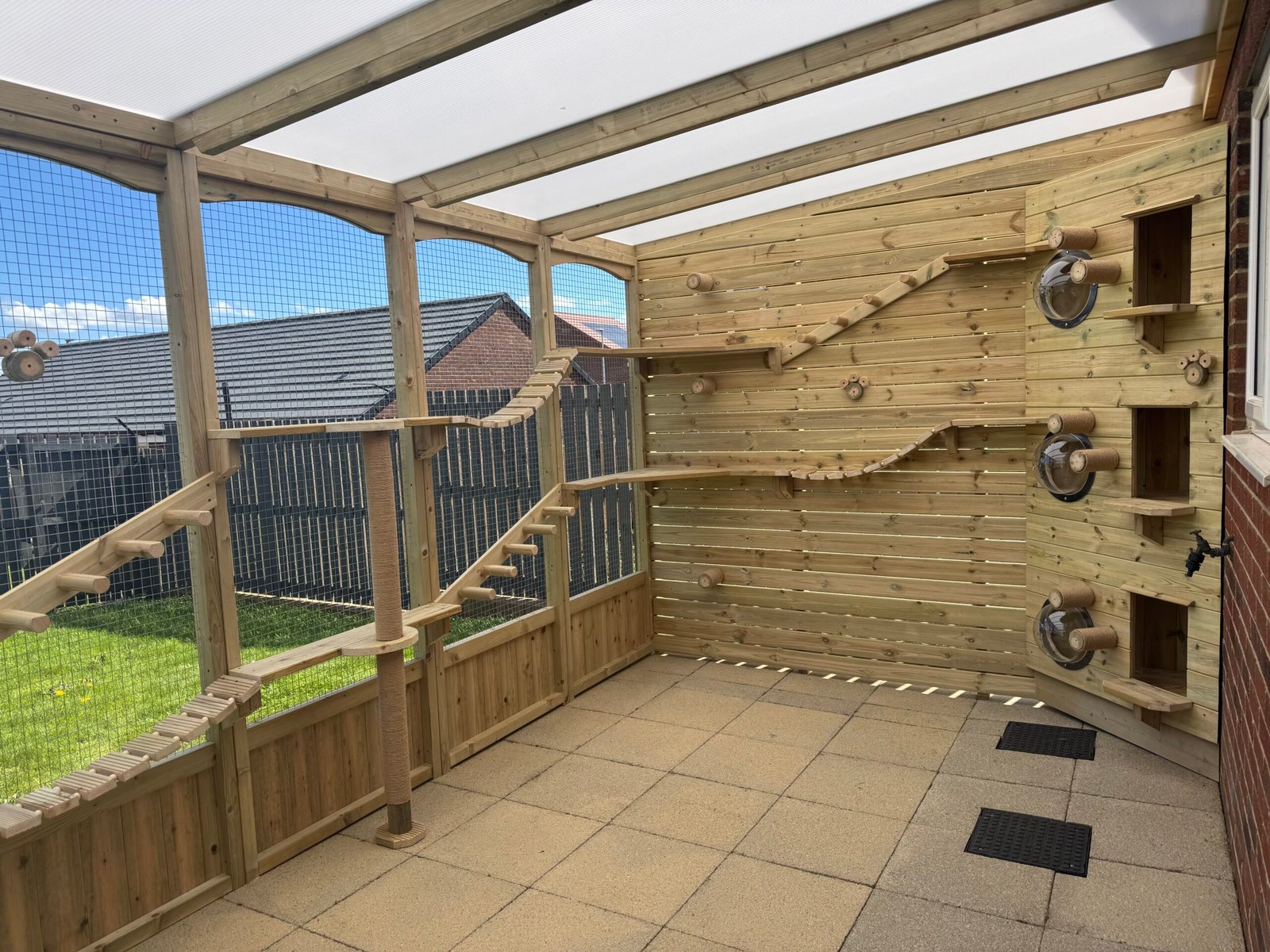
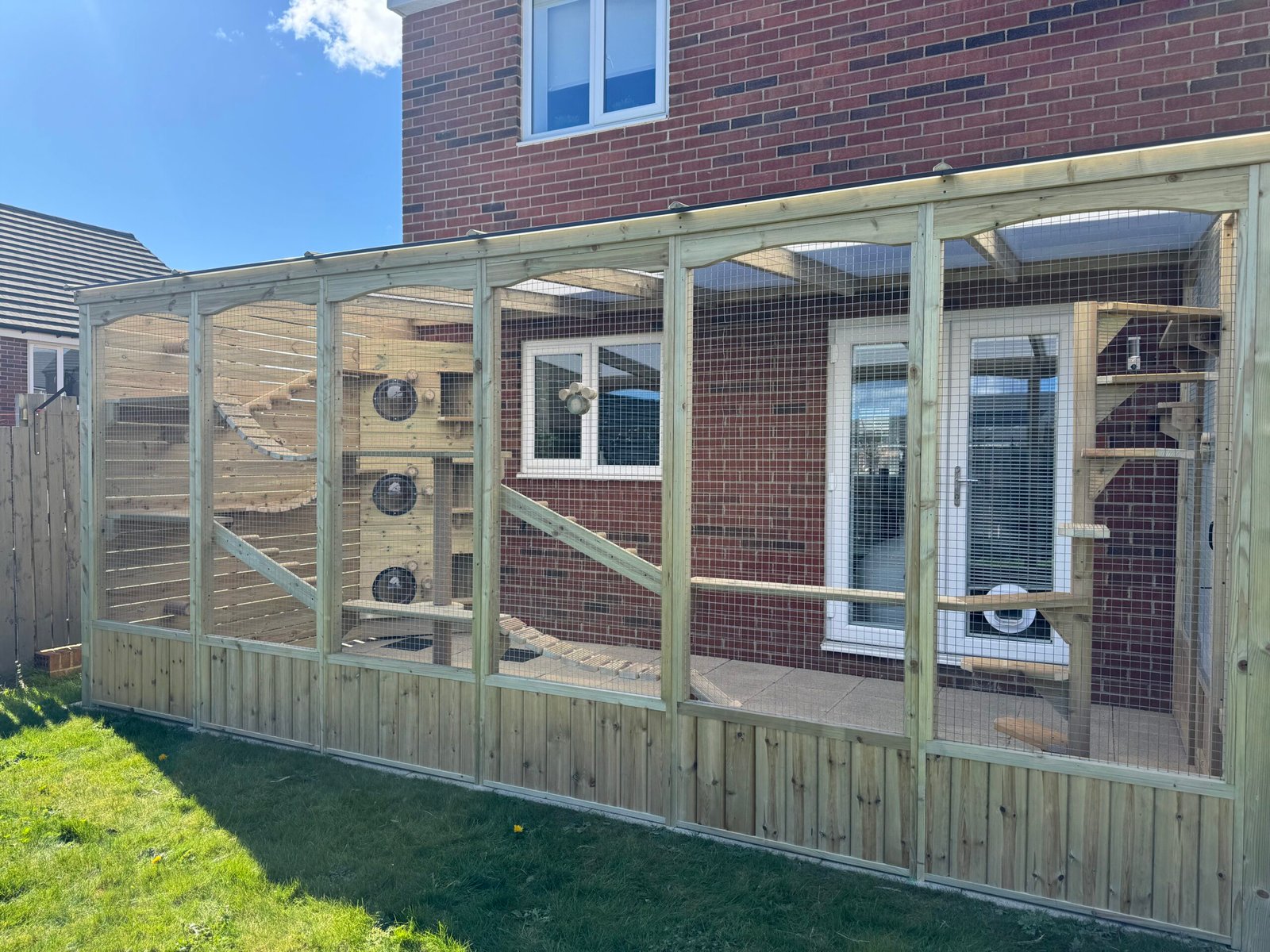
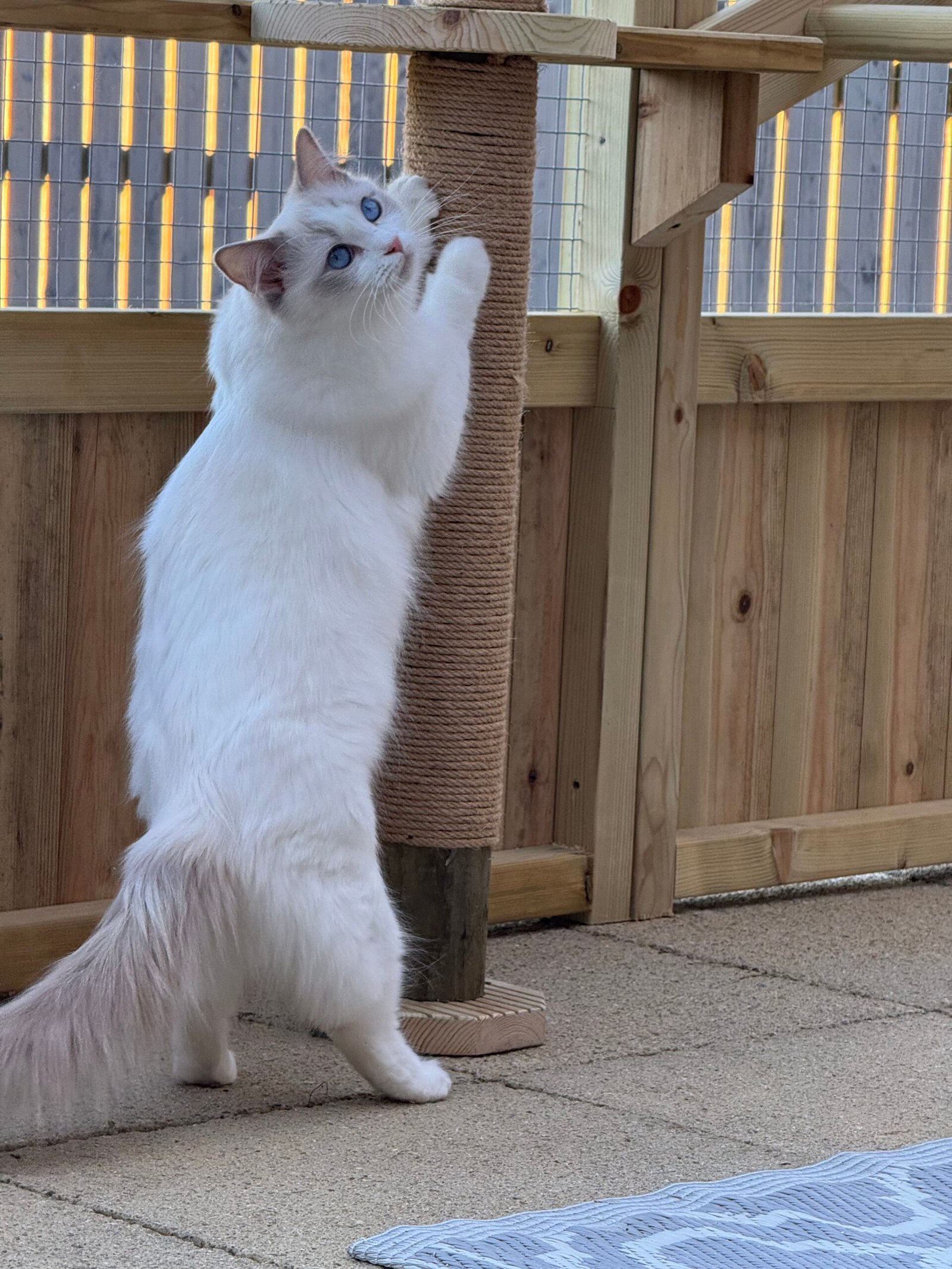
They enjoy a purpose-built catio by PetCaves UK as well as our garden, which has been professionally enclosed using the ProtectaPet system. This gives them the freedom to explore outside, enjoy the fresh air and sunshine and watch the world around them while remaining safely within our property.
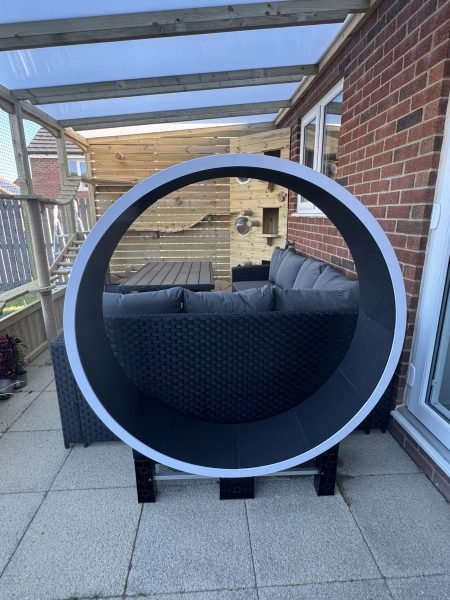
Inside, they have access to their Cazami Cat Wheel, scratching and climbing areas and, inevitably, more toys than any cat could reasonably need.
Enrichment is part of everyday life at Langleys. Whether they’re running on the wheel, exploring the garden, climbing, chasing toys or simply curled up somewhere comfortable with us, we want our cats to lead full and happy lives.